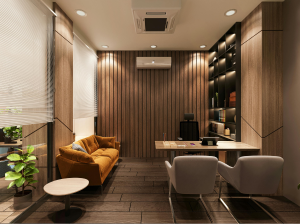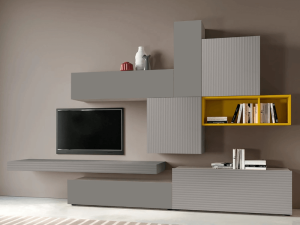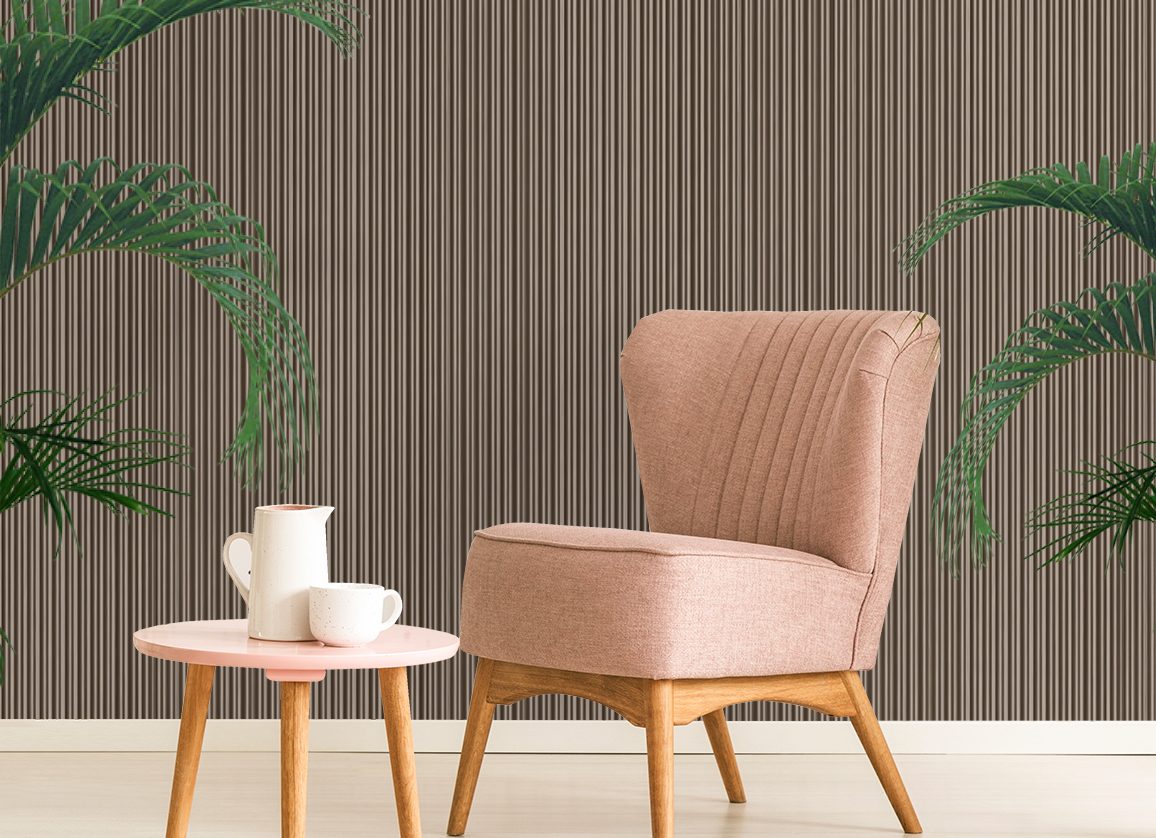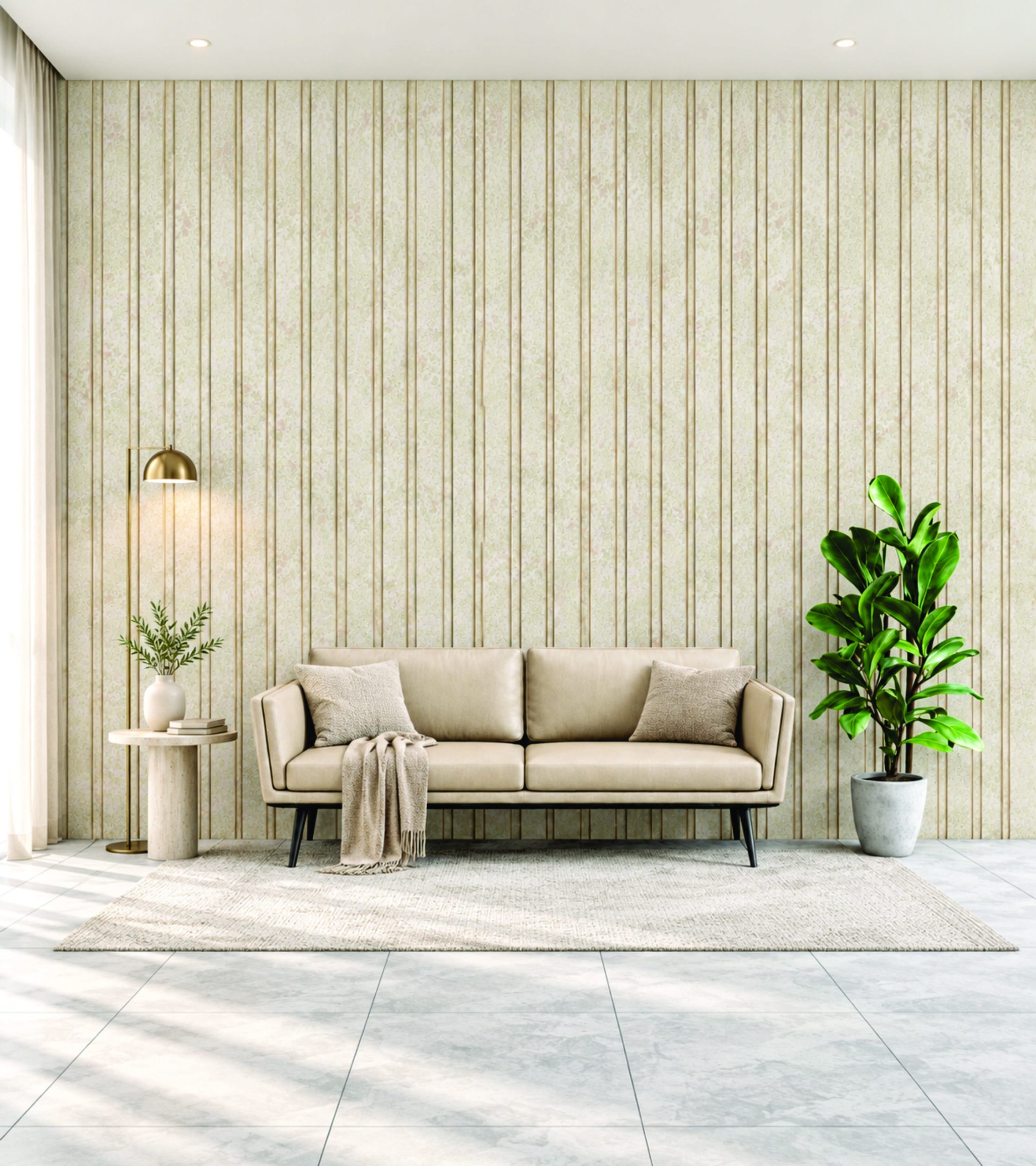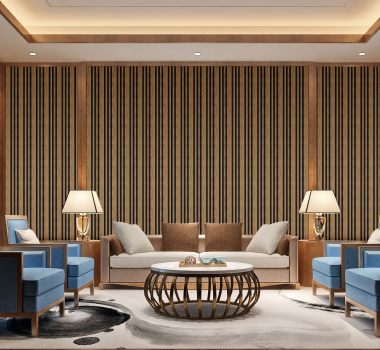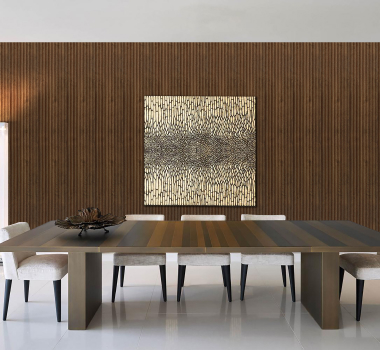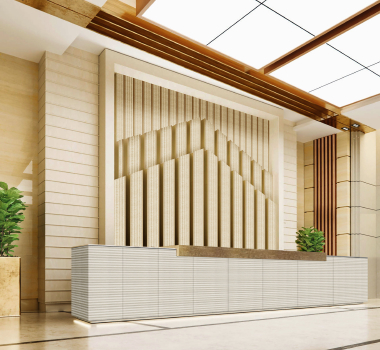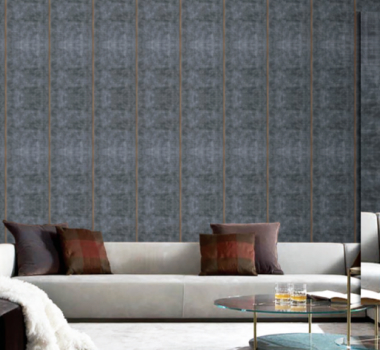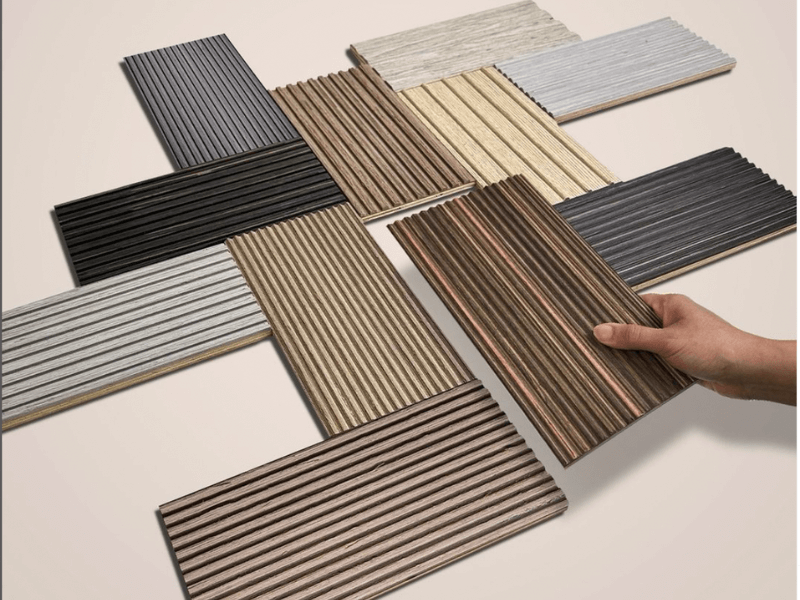
Modern fluted panel design has evolved beyond simple wall cladding to become a central element of contemporary interiors. From concealing wiring behind a media unit to creating a ‘Fifth Wall’ on your ceiling, these linear textures offer an effective method to add architectural height and visual intrigue to a flat room. Whether you are aiming for a cozy fluted panel for living room setup or a sleek fluted panel office design, the right application can define the atmosphere of the space.
Below is a technical guide on how to use fluted panel architectural design effectively to transform your interiors, balancing visual fluted panel aesthetic with material performance.
What is Fluted Panel Design?
Before diving into applications, it is essential to clarify the technical definition. What is fluted panel styling in the context of modern interiors?
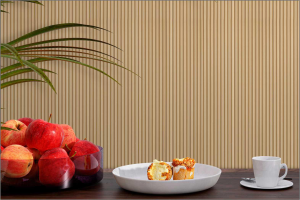
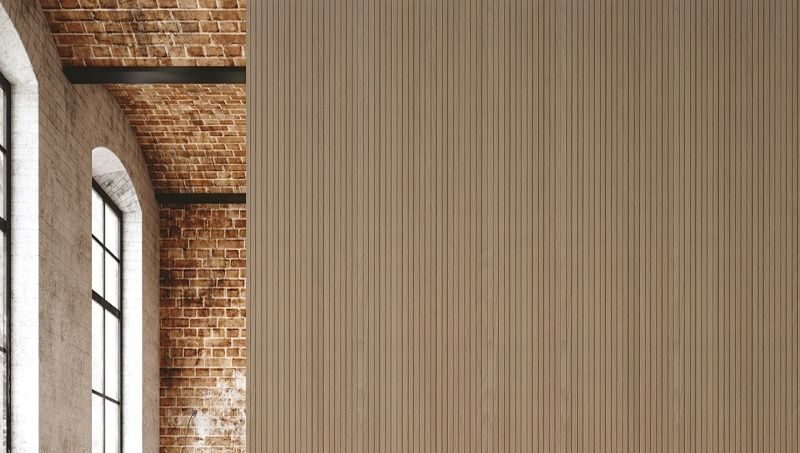
Put simply, fluted panel meaning refers to decorative engineered cladding featuring a series of linear, vertical grooves or ridges. This fluted texture creates a rhythmic play of light and shadow, adding depth to otherwise flat surfaces.
While originally inspired by classical Greek columns, contemporary fluted panel design has adapted to modern needs. Today, architects utilize materials like MDF fluted panel design, PVC, and natural wood seen in premium lines like the Ventura Legno collection to create decorative fluted panels that balance aesthetic appeal with functional durability.
The Versatility of Fluted Texture in Interiors
The primary appeal of fluted panel interior design lies in its versatility. It works across various aesthetics, from the minimalist Japandi style to opulent luxury.
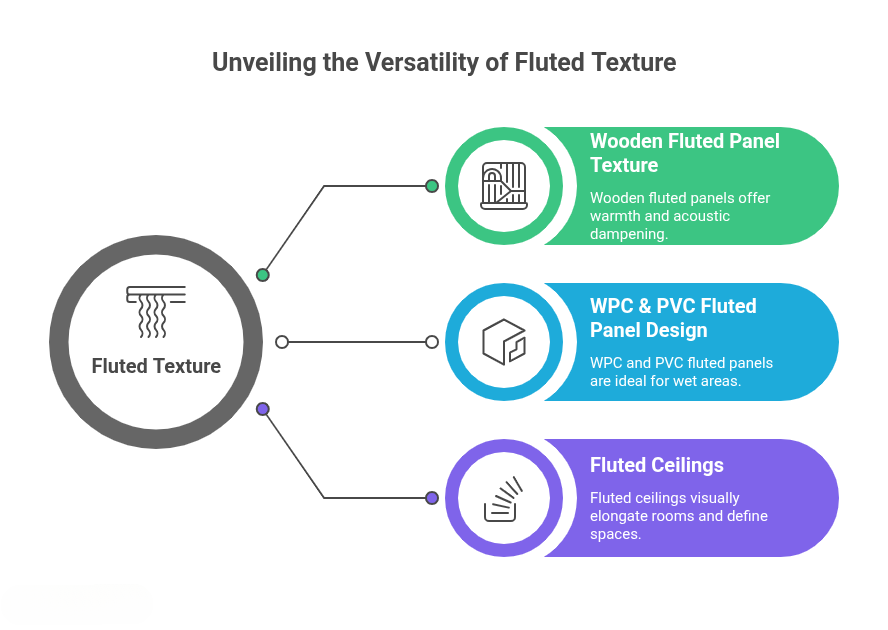
1. Wooden Fluted Panel Texture: For Warmth & Acoustics
For spaces where comfort and acoustic dampening are key, such as a master suite or a formal lounge, wooden fluted panel texture is a suitable choice. Unlike synthetic alternatives, real wood brings a natural variation in grain that softens the room; a quality perfectly captured by the Ventura Legno collection, which emphasizes the authenticity of natural timber.
Furthermore, fluted wood texture possesses inherent properties for acoustic control. The ridges naturally diffuse sound waves, reducing flutter echo a critical feature for a quiet fluted panel for bedroom installation or fluted panel for office interiors where speech intelligibility is required. Technical studies indicate that textured surfaces can help diffuse specular reflections, contributing to a more balanced acoustic environment compared to flat drywall.
Editor’s Note: While wood offers natural beauty, it requires periodic maintenance (polishing/sealing) compared to PVC fluted panel design to maintain the fluted design integrity.
2. WPC & PVC Fluted Panel Design: Solutions for Wet Areas
In areas exposed to humidity, such as bathrooms, kitchens, or semi-outdoor spaces, PVC fluted panel design is the functional standard. These panels offer the visual appeal of a fluted wall texture but come with distinct moisture resistance properties.
A fluted panel for interiors that sees heavy traffic or moisture ensures longevity without warping. WPC (Wood Plastic Composite) and PVC often found in durable ranges like the Ventura Ikon collezione are ideal for easy maintenance. While WPC offers a wood-like feel, PVC panels are often preferred for their hydrophobic (water-repelling) qualities in high-moisture zones.
Related Read : Fluted Panels: How to Pick the Right One for You
3. Beyond the Walls: Fluted Ceilings for a Fifth Wall Statement
One of the most effective strategies in fluted panel latest trends is treating the ceiling as the “Fifth Wall.” Installing a vertical fluted panel design that flows from the wall up onto the ceiling can visually elongate a room, making low ceilings feel significantly higher.
This technique is particularly effective in creating distinct zones in open-plan homes. For instance, a continuous band of fluted panel wall design wrapping onto the ceiling can visually separate a dining area from the living room without the need for physical partitions. This creates a seamless, wrapped look often seen in high-end interior fluted panels specifications.
Quick Comparison: Wood vs. WPC vs. PVC
Choosing the right material is critical for the longevity of your flute panel design.
Here Is a Technical Breakdown to Assist in Specification:
|
Feature
|
Real Wood / MDF |
WPC (Wood Plastic Composite) |
PVC Fluted Panel
|
|
Best Application
|
Living Rooms, Boardrooms, Bedrooms |
Exteriors, Facades, High-Traffic Areas |
Bathrooms, Kitchens, Basements
|
|
Moisture Resistance
|
Low (Hygroscopic; needs sealing) |
High (Water-resistant) |
Excellent (Hydrophobic)
|
|
Acoustic Properties
|
High (Sound diffusion) |
Medium |
Low (Reflective surface)
|
|
Maintenance
|
Medium (Polishing required) |
Low |
Very Low (Wipe clean)
|
|
Cost
|
Premium |
Mid-Range |
Budget-Friendly
|
3 Common Mistakes to Avoid with Fluted Panels
Even the most beautiful modern fluted panel design can fail if installed incorrectly.
Avoid These Three Common Pitfalls:
- Ignoring Lighting: Fluted design relies entirely on shadows to pop. Installing these panels in a dark corner without grazing light (like a track light or LED strip) will make the wall panel design texture look flat. Always plan your lighting to hit the ridges.
- Wrong Material in Wet Areas: Never use standard MDF fluted panel design in a bathroom. Even with paint, humidity will eventually cause the fibers to swell and delaminate. Stick to PVC fluted panel design for wet zones.
- Horizontal Installation in Low Rooms: While creative, running a fluted texture horizontally can make a room feel compressed. Stick to vertical fluted panel design to maximize perceived height.
Design Inspiration by Room
- Living Room: The Media Wall A fluted panel for living room TV units creates a sophisticated backdrop that hides wires and adds texture without distracting from the screen. Combining fluted panels texture with marble or flat laminates creates a stunning material contrast. For those seeking this specific mixed-material aesthetic, the Ventura Fusion collection offers pre-designed solutions that blend diverse textures seamlessly.
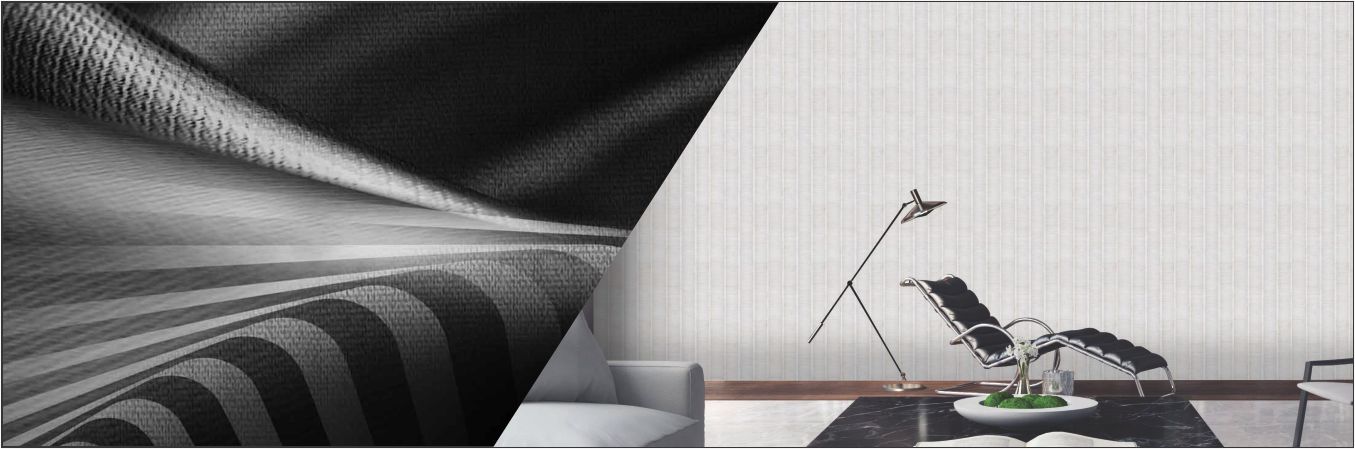
- Bedroom: Replace traditional upholstery with a headboard made of 3D fluted panel design. It is hygienic, easy to clean, and acts as a focal point. Fluted panels for bedroom applications often utilize soft, matte finishes to maintain a restful ambiance. The Ventura Fabrika collezione is particularly adept here, offering surfaces that mimic the visual softness of fabric with the durability of paneling.
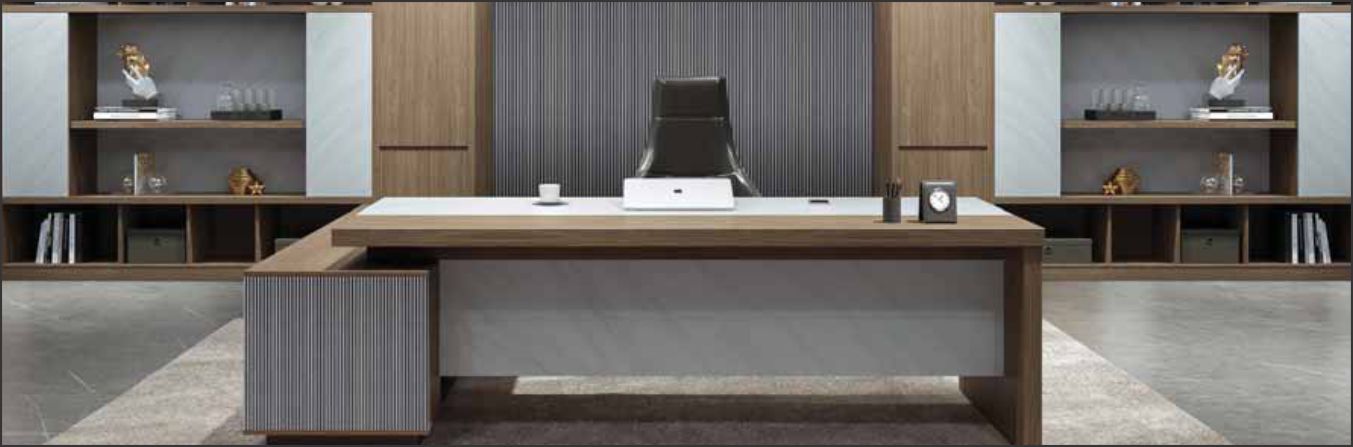
- Office: The Professional Backdrop For a fluted panel office design, consider using darker tones like charcoal or walnut. This adds gravitas to the space and improves video call backgrounds by reducing visual clutter through structured fluted panel aesthetics.
Conclusion
Ultimately, successful fluted panel design bridges the gap between architectural structure and interior decoration. Whether you select interior fluted panels for acoustic comfort in a home office or durable PVC options for high-traffic zones, the key lies in matching the material to the environment. By thoughtfully integrating wall panel design texture—using versatile lines like Ventura Legno, Ikon, Fabrika, or Fusion you elevate a simple room into a sophisticated, tactile experience that balances lasting durability with a modern fluted panel aesthetic.
Frequently Asked Questions
1. How do you use fluted wall panels?
Fluted wall panels are highly versatile and can be used as accent walls, headboards, TV back panels, ceiling features, or room dividers. Their vertical grooves create depth and texture, instantly enhancing the visual appeal of residential and commercial interiors.
2. Which panel is best for the wall?
The best wall panel depends on your design goal, durability needs, and budget. Fluted wall panels are a popular choice because they offer a modern, elegant look, improve aesthetics, and work well in living rooms, bedrooms, offices, and feature walls.
3. Is the fluted panel water-resistant?
Water resistance in fluted panels depends on the material. PVC and WPC fluted panels are generally water-resistant and suitable for moisture-prone areas, while MDF or wooden fluted panels may require protective coatings. Always check the product specifications before installation.
4. Do fluted panels reduce noise?
Yes, specifically wooden fluted panel texture. Unlike flat drywall which bounces sound directly back (specular reflection), the ridges of a fluted design diffuse sound waves, reducing flutter echo in open-plan offices.
5. What is the difference between louvers and fluted panels?
While often used interchangeably, louvers usually refer to angled slats used for ventilation or light control. Fluted panel designs are solid surfaces with grooves used primarily for decorative wall panel design texture.
6. Can I paint fluted panels?
Yes, specifically MDF fluted panel design and paintable PVC versions. This allows you to match your fluted wall panel design to your exact color palette.
Manish Maheshwari
Position: Founder – Ventura International Pvt Ltd.
Education: IIT Roorkee (B.E. – Mechanical Engineering) and IIM Lucknow (Marketing & Finance)
Manish Maheshwari, the visionary Co-founder of Ventura International. With a background in Engineering from IIT Roorkee and an MBA from IIM Lucknow, his expertise spans across Finance, Economics, and Strategy. At the helm of Ventura’s vision, Manish leads the charge in planning and executing strategies for growth and innovation. His unwavering passion ensures that Ventura sets the bar high, always striving for unparalleled excellence.