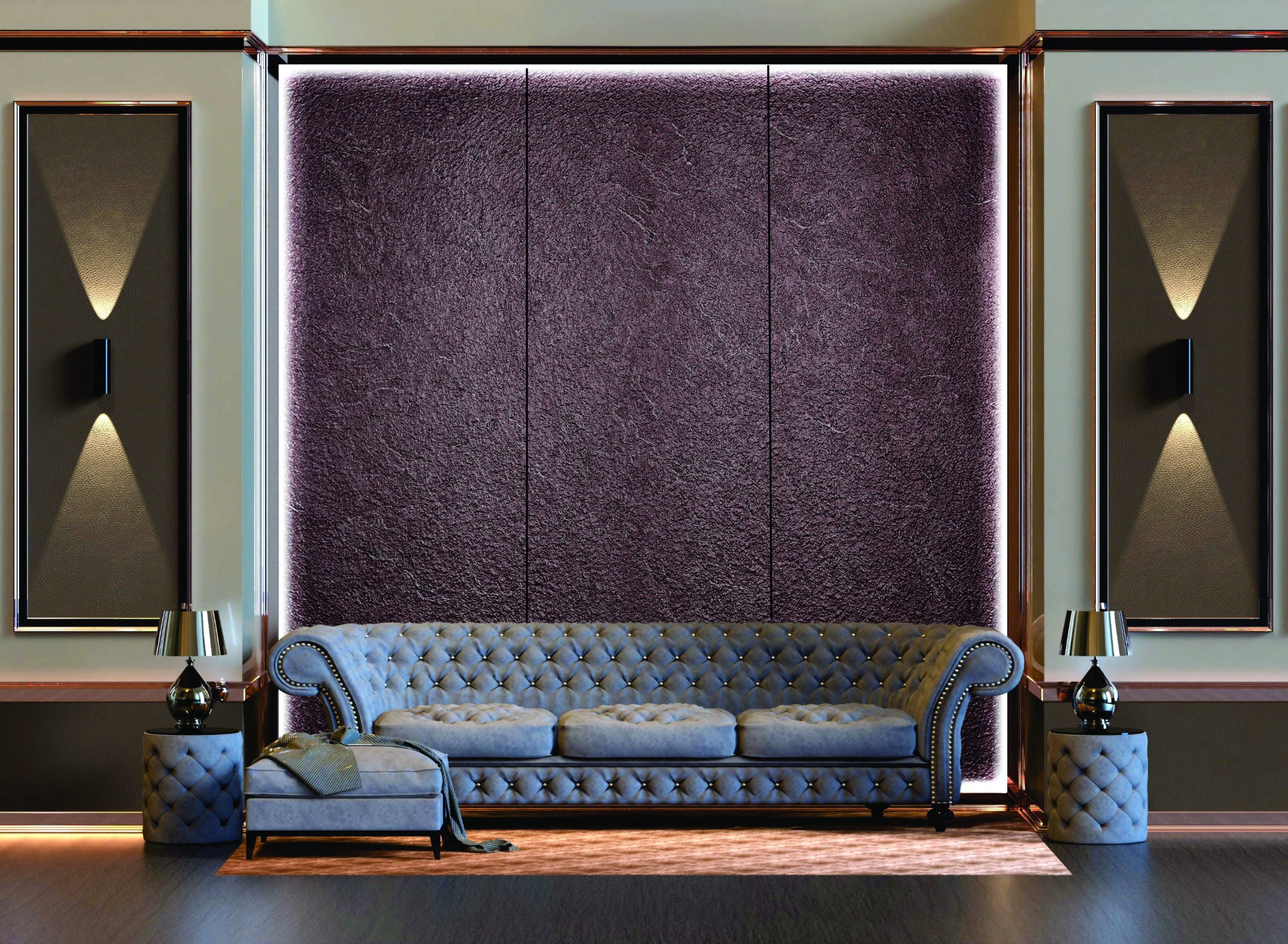
Luxurious Living: Discover Leather Wall Panels with Ventura
As the world of interior design continues its evolution, there emerges a trend that leaves an indelible mark on the canvas of home decor – the enchanting world of Faux
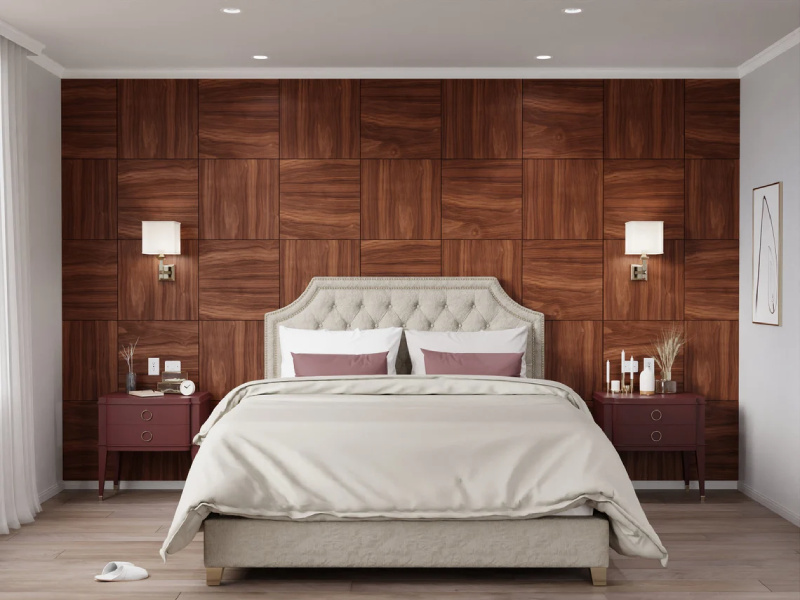
Wood paneling veneer serves as a strategic architectural bridge between the cost-effectiveness of commercial plywood and the aesthetic depth of solid timber. For Indian homeowners and designers looking to elevate interiors, veneered panels provide the visual warmth of natural wood while mitigating the environmental footprint and structural instability often associated with solid lumber sourcing.
Unlike solid wood, which is biologically hygroscopic and highly susceptible to warping due to India’s fluctuating humidity levels (especially in coastal or monsoon-heavy regions), a high-quality veneer panel is technically engineered for stability. It is typically bonded to a dimensionally stable substrate such as Gurjan plywood or High-Density Fiberboard (HDF) ensuring structural integrity alongside visual appeal.
Whether you are an architect specifying materials for a corporate lobby or a homeowner renovating a living room, understanding the technical nuances of wooden veneer panels from standard 0.5mm face thickness to veneer panel design mechanics is crucial for making an informed specification decision.
To assist you in selecting the correct veneer paneling solution, we have categorized the distinct types available in the domestic market based on manufacturing and grain characteristics.
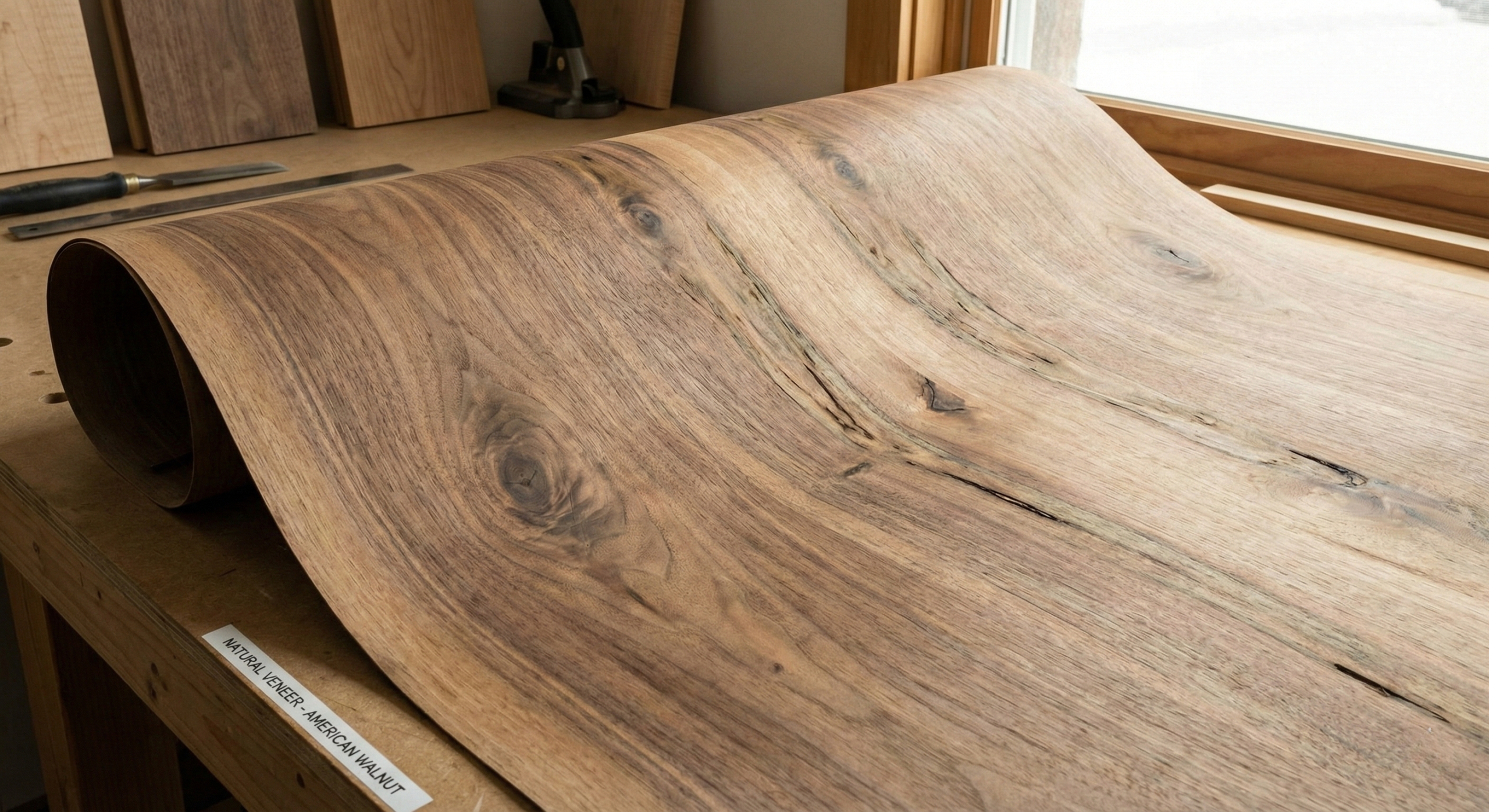
These are sliced directly from high-grade logs, ensuring that every sheet possesses a unique grain pattern and an authentic natural appearance. In the Indian context, popular species include Burma Teak, American Walnut, and Rosewood, valued for their durability and rich aesthetics. Because no two logs are identical, these veneered panels offer distinct visual characteristics but require careful batch matching (sequence matching) during installation to ensure consistency across large surface areas. Natural veneers are produced from logs that retain original wooden grains, textures, and colours, making them a preferred choice for premium interior applications, with commonly used options such as oak, walnut, maple, teak, mahogany, and cherry.
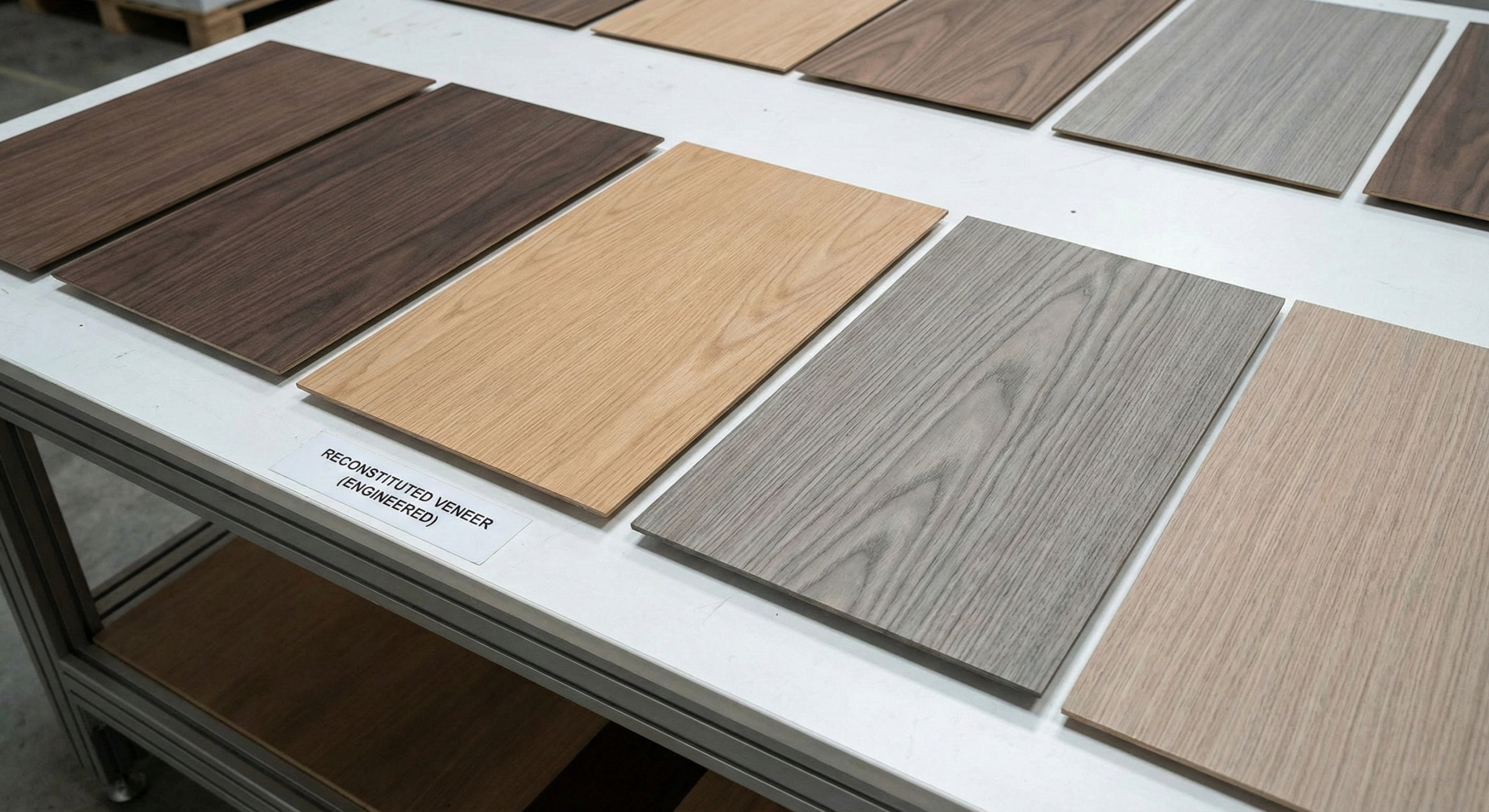
Often referred to as “Reco” veneer, this material is manufactured from fast-growing, renewable timber species. The wood is dyed, laminated into blocks, and re-sliced to mimic rare exotic grains. The primary advantage is consistency; it eliminates the natural variations found in log-cut veneers, making it ideal for covering large commercial surface areas where veneer panel uniformity is required.
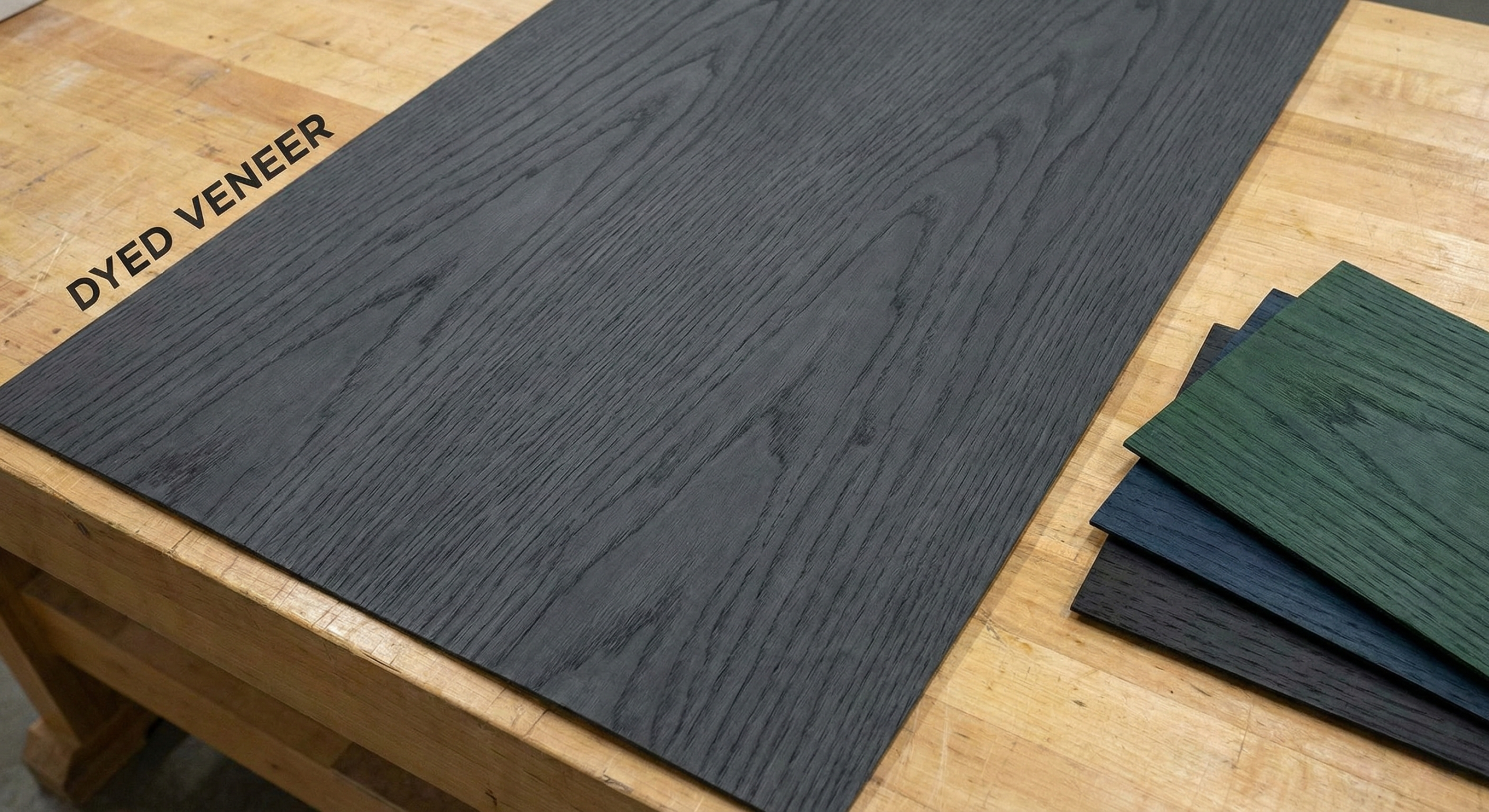
Veneer paneling can be chemically dyed to achieve specific color palettes while preserving the natural grain texture. This process modifies the cellular color of the wood to a custom hue, reducing color variation between batches and allowing for modern interior applications where specific color matching is critical.
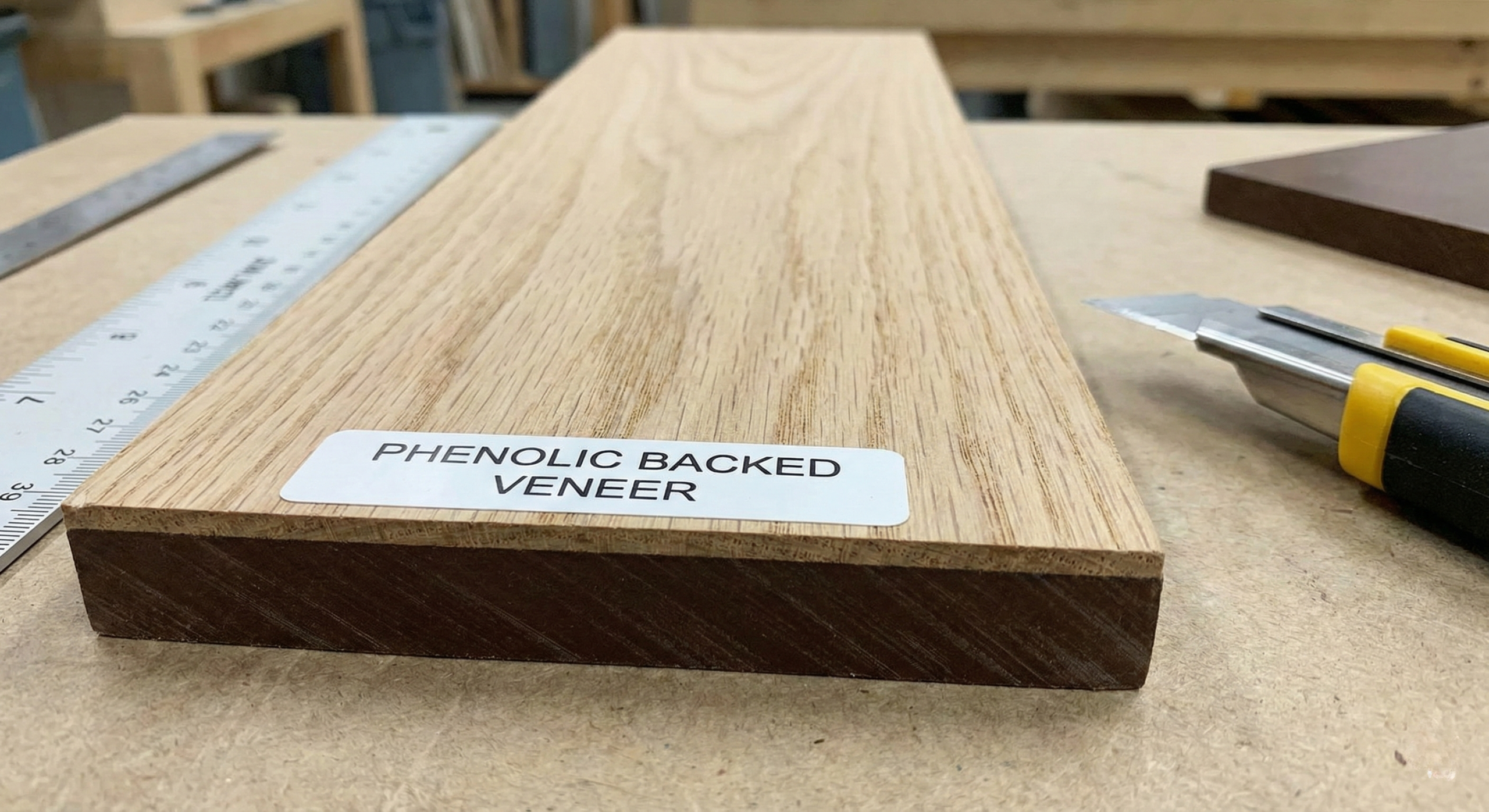
While less common in standard residential decor, these veneer panels are backed with a phenolic resin layer. This backing provides significant resistance to cracking and enhances moisture tolerance, making them suitable for vertical applications in high-traffic zones or as durable cladding in semi-dry areas.
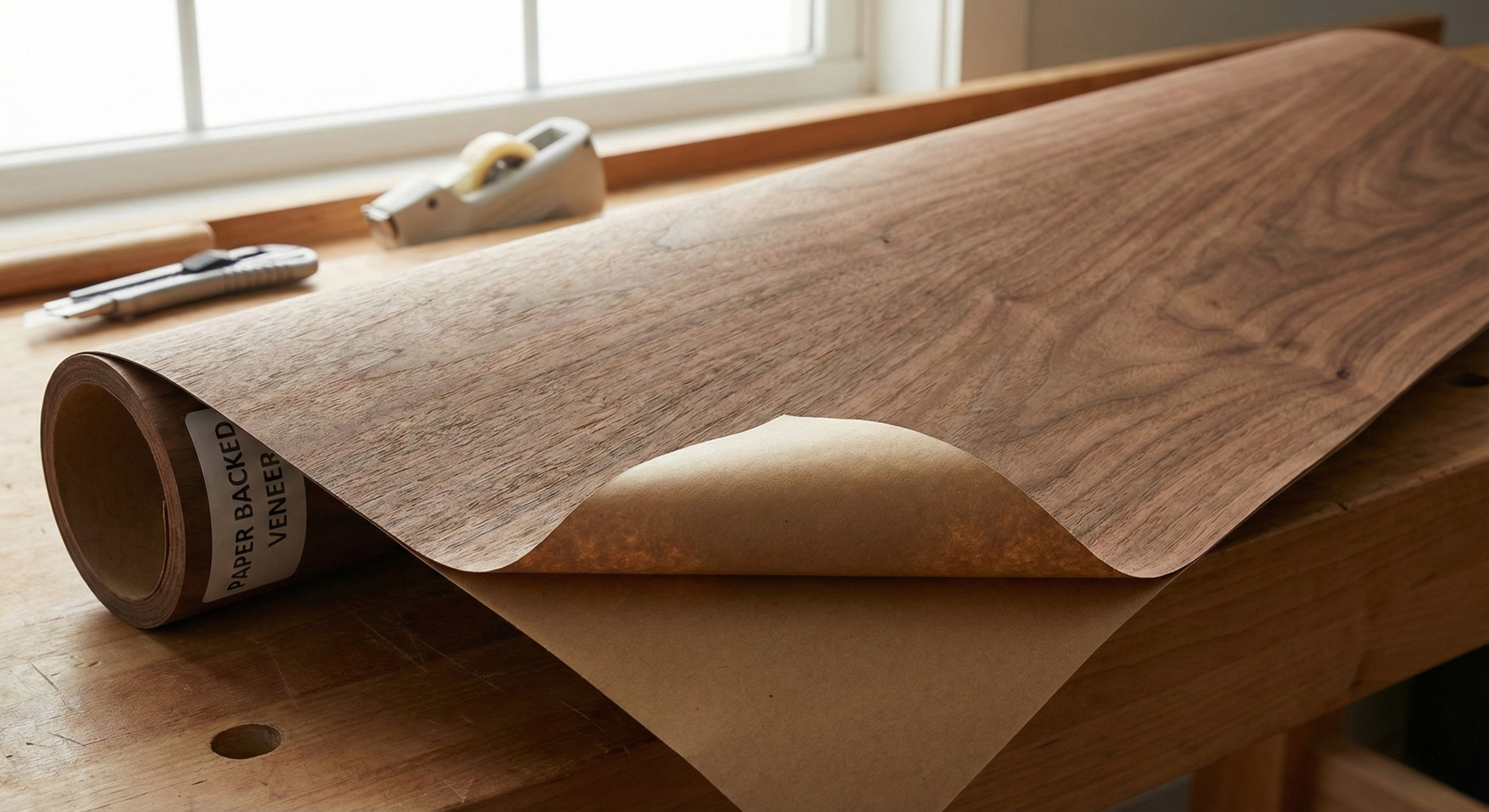
These serve as flexible veneered panels, often utilized for curved surfaces, columns, or intricate furniture joinery where a tight turning radius is required. The paper backing prevents the wood slice from splitting during the bending process, allowing for seamless veneer panel design on rounded architecture.
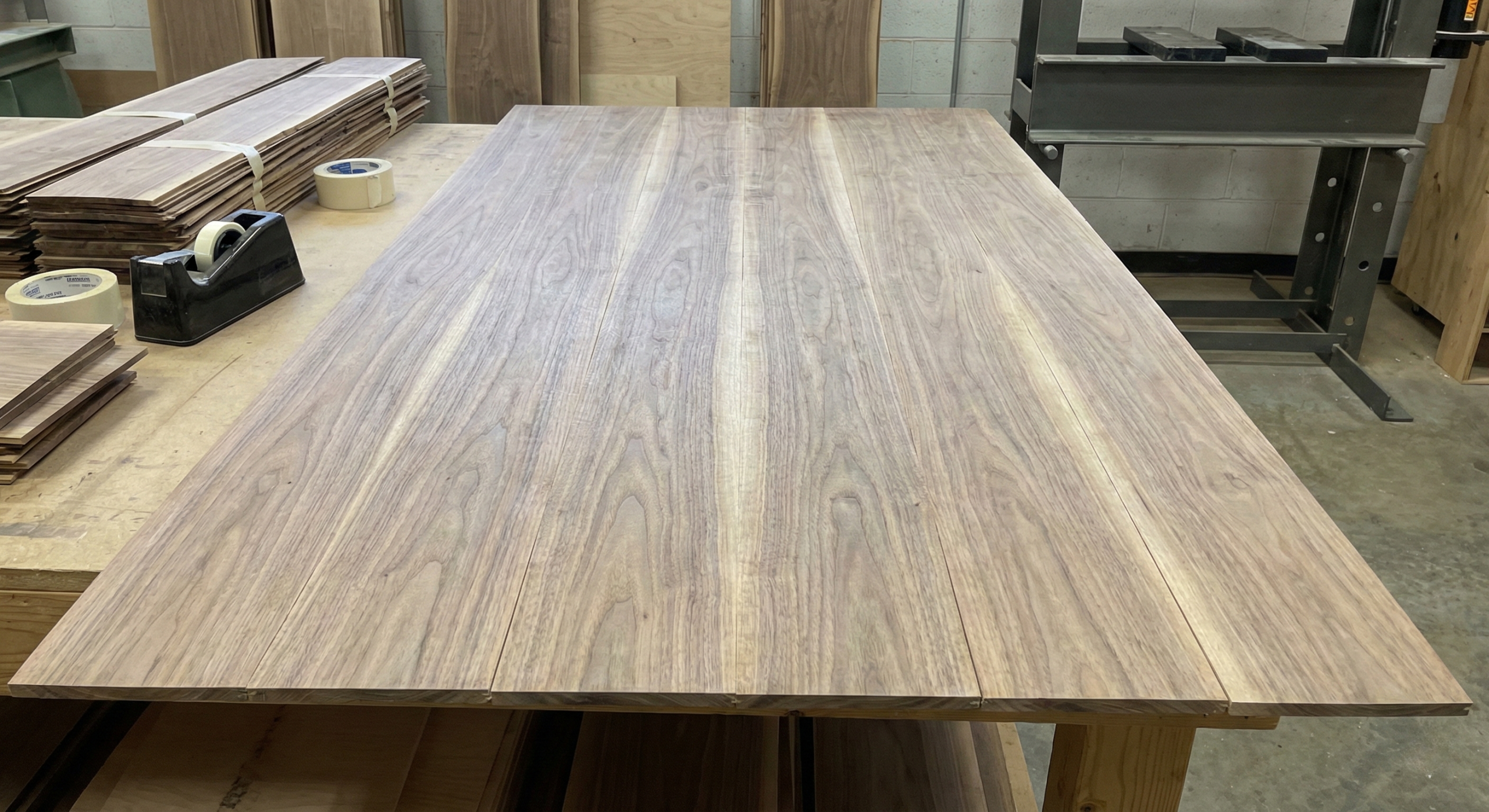
This refers to raw veneer flitches that have been joined together (spliced) to create larger, ready-to-press sheets. These are typically prefabricated to standard panel sizes (e.g., 8×4 ft) to expedite the lamination process on-site or in factories.
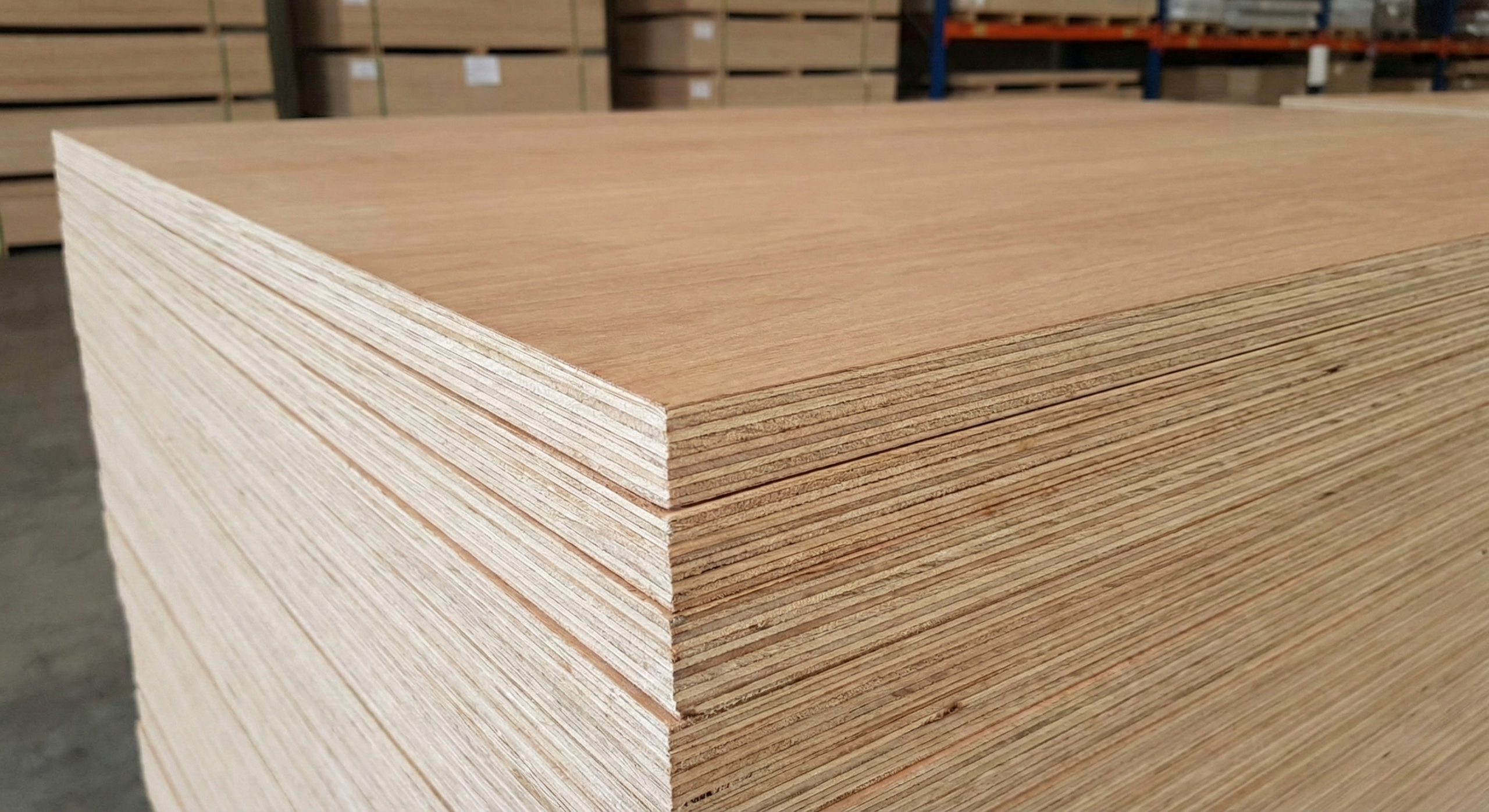
These Wood Veneer panels have a veneer face and veneer-core plywood back. They also have an excellent strength-to-weight ratio and are often utilized in cabinetry and custom furniture.
The accuracy and elegant appeal offered by wood veneer panels make them a favorite for designers since they effortlessly improve the aesthetics of the interior.
Here Are a Few of the Most Common Applications
Wood veneer is most popular for decorative wall paneling due to its high quality, refined style, and modern appeal. With wood veneers, creating accent walls is achievable in living rooms, bedrooms, and commercial areas such as lobbies and boardrooms.
Related Read : Decorative Wall Panels That Elevate Your Home Decor
In order to achieve a rich and uniform look, Wood veneer panels can be extended to the ceiling, complementing and enhancing the atmosphere in the room while also unifying the room.
While manufacturing furniture, products such as dining and coffee tables, cabinets, and sideboards make use of wood veneer panels. These enable the designers to realize the splendor of exotic or rare types of wood at a fraction of the price.
Veneers elevate the aesthetic of kitchen spaces when applied to cabinet doors, drawers, and islands. Their application enhances the look of the kitchen and the entire area, while their natural surface finish is compatible with modern or classical designs.
Related Read : Top 15 Two Colour Combinations for Kitchen Laminates You’ll Love
The veneered surfaces of wardrobes and built-in closets provide an elegant and uniform finish to the bedrooms and dressing areas.
Related Read : Reasons To Choose Laminates for Your Wardrobe
Wood Veneer panels are a standard feature in corporate design. They bring elegance and professionalism to executive desks, wall partitions, and meeting tables.
Related Read : 12 Trendy Office Design Ideas to Refresh Your Workspace
Hollow-core internal doors finished with veneered timber add beauty and uniformity, either harmonized with paneling, wood trims, or furniture pieces placed around the space.
Related Read : 20 Elegant Main Door Designs Perfect for Classic Homes
One of the most frequent queries from Indian homeowners is the choice between Wood Veneer and High-Pressure Laminate (HPL/Sunmica). While laminates are synthetic composites, veneer panels utilize a slice of organic material.
Here Is a Functional Comparison to Guide Your Selection:
|
Feature |
Wood Veneer |
Laminate (HPL) |
|
Composition |
Thin slice (approx. 0.5mm) of real hardwood bonded to a substrate. |
Layers of kraft paper soaked in resin, topped with a decorative printed layer. |
|
Appearance |
Natural, non-repetitive grain depth and chatoyancy (sheen). |
Printed texture; pattern repeats every few feet. |
|
Cost |
Premium pricing (Material + Polishing labor costs). |
Budget to Mid-range (Pre-finished). |
|
Maintenance |
Requires sealing (PU/Melamine) and periodic re-coating every 5-7 years to prevent oxidation. |
Zero maintenance; resistant to surface abrasion. |
|
Lifespan |
High longevity (15+ years) if maintained; surface scratches can be sanded and refinished. |
Moderate lifespan (7-10 years); cannot be repaired if chipped or cracked. |
|
Tactile Feel |
Warm, organic texture. |
Synthetic, plastic-like feel. |
Investing in veneered panels offers architectural advantages that extend beyond surface aesthetics.
Here Are the Core Benefits of Wood Veneer:
Wood paneling veneer optimizes forestry resources. According to industry yield data, slicing a log into veneer produces significantly more face coverage extending the yield of a single log by approximately 40 times compared to sawing the same log into solid lumber planks. This makes wooden veneer panels a resource-efficient choice for projects prioritizing material conservation.
When glued over a stable Gurjan plywood or MDF core, the veneer panel structure is engineered to resist the expansion and contraction caused by seasonal humidity changes, a common failure point in solid wood furniture.
From intricate marquetry to broad, seamless veneer panel designs, the customization options allow for book-matching, slip-matching, and radial patterns that are difficult to achieve with solid timber.
Also Read : Transform your Interior Spaces
Using thin slices of wood to create veneer sheets means timber is being put to better use than solid wood. Reconstituted veneers are also environmentally friendly as they make use of fast-growing tree species.
Veneers serve the purpose of appearing as solid wood, giving the luxury aesthetic at a lower price. This particularly helps for bigger projects where costs and efficient material usage are greater priorities.
Being primed to lighter substrates also makes wood veneer easier to handle and install compared to solid wood parts. This makes it an ideal choice for ceilings, wall cladding, and furniture.
Related Read : What is Wood Veneer?
It is guaranteed that the textures and colors of sliced veneers will be consistent, which is important for large areas like paneling and cabinetry.
Veneer wood surfaces are easy to clean. Simple dusting or wiping with a wet cloth will keep the surfaces clean and sparkling.
Wood veneer panels can either be stained or polished, providing them complete control over the final appearance. The designers have the freedom to apply matte or gloss texturizers as they see fit.
Veneered panels demonstrate how such materials can be revamped for contemporary environments. Their elegant aesthetics, numerous uses, and environmentally responsible production processes position them as a preferred option for both designers and homeowners. In a statement wall, chic trim, supremely refined furniture or cabinetry, and wood veneers add deep complexity and elegance to interiors.
To ensure your interiors remain contemporary, consider these surfacing trends currently dominating the Indian specification market:
Proper stewardship ensures your veneer paneling retains its value. Follow these maintenance guidelines:
If you are thinking of updating your home or office interiors, make sure to check out the timeless beauty and functionality of wood veneer panels at the Ventura Architectural Experience Center.
📍 Location: Kirti Nagar, Delhi
📞 Contact: +91 9717205757 | +91 9315580079
In the realm of modern Indian architecture, choosing between veneer panels and solid wood is not merely a question of aesthetics but of long-term structural performance. By opting for high-quality wood paneling veneer, you ensure that your interiors possess the timeless elegance of nature while benefiting from modern engineering that resists our unique climatic challenges. Whether you prefer the consistency of reconstituted grain or the bespoke character of natural logs, the right veneer panel design transforms walls from mere partitions into artistic statements. We recommend consulting with a surface solutions expert to select the grade and finish that best suits your project’s functional needs.
Yes, generally, veneer panels cost 2-3 times more than standard laminate sheets. The cost reflects the sourcing of real timber species and the skilled labor required for application and polishing (PU or Melamine) after installation.
Wood paneling veneer can be utilized in kitchen shutters, but it requires a high-grade, sealed PU finish to resist moisture and grease. However, for high-traffic “wet zones” (like the sink area), the architectural standard is to recommend acrylic or marine-grade laminate to mitigate water damage risks.
In the Indian market, the standard thickness for the decorative face veneer is typically 0.5mm to 0.6mm, conforming to standards like IS 1328 for decorative plywood surfaces. When professionals refer to “4mm veneer,” they are usually referring to a pre-pressed veneer panel where the face veneer is already bonded to a thin plywood backing sheet.
Wood veneer is a thin layer of natural wood sliced from logs and bonded onto a base material like plywood or MDF. In furniture construction, it offers the look of solid wood while being more cost-effective, stable, and eco-friendly. Veneer allows for premium finishes, consistent grain patterns, and reduces the risk of warping or cracking.
Advantages:
Disadvantages:
Veneer is a thin sheet of real wood applied over a stable core. High-end furniture makers prefer veneer because it delivers a luxurious wood finish, superior dimensional stability, and access to rare wood grains without using large quantities of solid timber. It also minimizes cracking and movement caused by humidity changes, making furniture more durable and refined.

As the world of interior design continues its evolution, there emerges a trend that leaves an indelible mark on the canvas of home decor – the enchanting world of Faux
In the ever-evolving world of interior design, one trend that's been capturing the attention of designers and homeowners alike is the use of decorative interior wall paneling. Gone are the
Often referred to as the common practice of covering indoor walls with a decorative material, Interior Wall Panels provide a bright and uplifting effect to any space. Additionally, products like
In our quest to add a pinch of style, many innovations have tinkered with the design features of home interiors and produced mixed results. However, interior Wall Panels have tried
As the season is slowly segueing from monsoon to winter, we believe a change in the interior is in order. Cold weather and Scandinavian/minimal aesthetics are like a match made
With the year drawing to an end, the days dotted with festivities set us up for the new beginnings that lie ahead. These are exhilarating times and what better way
There’s nothing more charming than stepping into a kitchen that exudes the simplicity of a bygone period and beats with a contemporary pulse. Best Wall Panels in Delhi, that’s where
No matter how solemn promise we make to ourselves to keep our homes shipshape and shiny, it just manages to retrograde into the clutter that it was—it's like having our
Alright, we are saying this with every active atom of our bubbling creativity that we love GOLD. Yes. Gold is stylish, never out of style, adds an instant pop of
It's not every day that we get to have some sit-down time with our founder, Manish Maheshwari. So when we saw an opportunity for the same—we decided to make the