Home » Blog » A Primer On Choosing Surface Decors For Kitchen
A Primer On Choosing Surface Decors For Kitchen
How Vacuum Desiccators Work
Vacuum desiccators operate by reducing the internal pressure of a sealed chamber, accelerating moisture removal from samples. The vacuum pump draws out air, including water vapour, lowering relative humidity inside. This vacuum-induced environment significantly enhances the drying efficiency compared to atmospheric desiccators.
To maintain low humidity, a desiccant (typically silica gel) is placed at the bottom of the chamber. However, in vacuum models, it’s the pressure differential that drives performance, not just the desiccant. For instance, Borosil Scientific’s vacuum desiccator sets, such as the 3083 and 3085, feature glass stopcocks that provide secure vacuum retention and controlled pressure release.
Key Features of Vacuum Desiccators
The performance of any vacuum desiccator is directly tied to its material integrity, seal design, and user control. Below are critical features integrated into Borosil Scientific’s standard and amber vacuum desiccator sets:
Feature
Borosil Scientific Specification
Stopcock Assembly
Fitted with a glass spindle for chemical resistance and vacuum stability
Flange Finish
Precision-ground glass flanges for airtight sealing
Plate Support
Internal ledge in the base accommodates porcelain support plate
Glass Material
Borosilicate, with clear and amber options
Design Suitability
Compatible with vacuum operations and routine drying under atmospheric pressure
Additionally, models 3084 and 3085 offer amber glass, suitable for light-sensitive substances.
Applications of Vacuum Desiccators in Laboratories
The scope of vacuum desiccator usage spans across chemical, pharmaceutical, biotech, and analytical labs. Applications include:
Moisture-sensitive sample storage: Especially important for hygroscopic chemicals like sodium hydroxide, lithium chloride or analytical reagents.
Vacuum drying of solids: It is suitable for slowly drying powders and crystalline compounds, especially when heat-based drying methods may damage the sample structure.
Storage post-drying: For weighing processes requiring a stable sample mass post-oven drying.
In places where the samples are constantly changing, vacuum desiccators help keep things moving quickly and cut down on downtime by getting rid of the need to re-dry.
Types of Vacuum Desiccators
Borosil Scientific offers a focused selection of desiccators designed specifically for vacuum applications. All models incorporate ground-glass precision and glass stopcocks for effective vacuum sealing.
Product Code
Glass Type
Stopcock
Amber Option
Porcelain Plate
Vacuum Ready
3082
Clear
No
No
Yes
Yes
3083
Clear
Yes (glass)
No
Yes
Yes
3084
Amber
No
Yes
Yes
Yes
3085
Amber
Yes (glass)
Yes
Yes
Yes
Standard Clear Vacuum Desiccators: Suitable for general-purpose drying and short-term storage.
Amber-Coated Vacuum Desiccators: These are best for light-sensitive compounds, protecting samples from photodegradation during storage or drying.
The inclusion of a porcelain plate across all models supports uniform drying and safe sample placement.
Materials Used in Vacuum Desiccator Construction
Borosil Scientific uses borosilicate glass because it is better at withstanding both chemicals and temperature changes than other types of glass. Structural durability makes sure that you can safely use the device under vacuum conditions. Key materials used are:
Body and Lid: Borosilicate glass (Amber-coated variants for 3084 and 3085).
Stopcock: Glass spindle (models 3083 and 3085), known for low permeability and high chemical resistance.
Support Plate: Glazed porcelain, chemically inert and stable under thermal variation.
Knob: High-grade plastic for ease of handling under vacuum conditions.
No metallic components are used in contact with samples, thereby reducing the risk of contamination.
Selecting the Right Vacuum Desiccator for Your Needs
Selecting the correct vacuum desiccator depends on the use case. The table below outlines practical selection criteria:
Requirement
Recommended Model(s)
Vacuum drying only
3082, 3083
Light-sensitive sample storage
3084, 3085
Precision vacuum control
3083, 3085 (Glass stopcock)
Limited budget
3082 (no stopcock)
Deciding what surfaces to opt for your kitchen is easier said than done. That the core of furnishing our kitchens is predicated on utility with aesthetics, the real task is finding surface decor that achieves this ideal balance. Because—we don’t want our kitchen to look like a visual cacophony with elements crammed together but a coherent, put-together space that exudes warmth.
After all, it’s the most important part of our homes and so it warrants research—which, good for you, we have done in order to make the process of selection a breeze. Whether you have stock cabinets or fully bespoke ones, knowing the following will come in handy—
#1: COLOR
Just because your kitchen is a strictly functional area of your home doesn’t mean it can’t have colors. If you want to add a fresh point of view or zest in your kitchen then what another way than some delightful hues. We imagine an energetic yet soothing color palette of Blue, Grey, and Light Grey from our exclusive curation of wood fiber panels from Valchromat. Shutters sited away from the cooking section can be clad in Valchormat fiber panels for a burst of fresh color. While the Blue will take the center stage, Grey and Light Grey will complement and contain the intensity of Blue to make it all look cohesive.
#2: TEXTURED
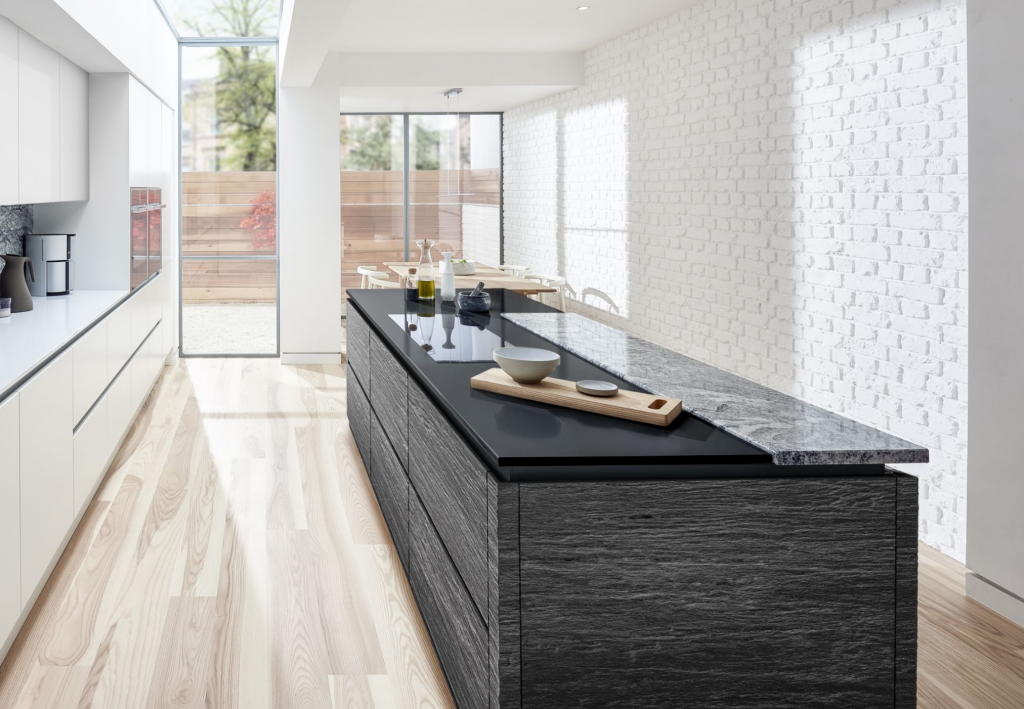
For those of you who are a little skeptical about introducing colors, there’s always texture to punch up visual interest in your kitchen. Whether you want to add depth or visual weight, a textured surface decor will anchor your kitchen while imparting a sense of intimacy to it. The kitchen island here which is clad in embossed veneer panel Chopped Wood from Holz in Form anchors the space and trains the spotlight on the prominent part of the kitchen.
GLOSSY
No doubt that glossy surface decors are the first choice for those looking to conjure up an unabashedly luxurious feel in their kitchen. But when something looks do precious, doesn’t that mean high maintenance and compromise on performance? Well, that isn’t the case with VetroTecacrylic high glass panels from Otto, Germany. Offering outstanding resistance to abrasion and chemicals, these high gloss panels are especially recommended for demanding practical environments like kitchen owing to their hard-wearing properties.
MATT FINISH
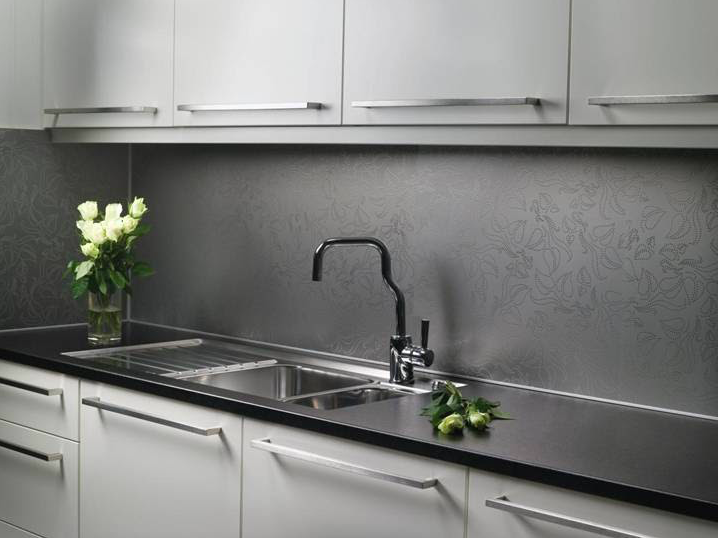
Without a doubt, matt finish surface decors are a popular choice among those who want to keep things fail-safe and effortlessly elegant. With moderate to little to no reflectiveness—matt finish surface decors are perfect to imbue a sense of refined practicality in kitchens. Decorative recyclable panels, RMD work unbelievably well in the kitchen—all thanks to their water-resistant and stain-free properties. Produced sustainably, these panels are super easy to install (an excellent option for those who take pride in a good DIY) and basically are no-fuss surface decors which won’t make you break a sweat every time you think about cleaning them!
METAL FINISH
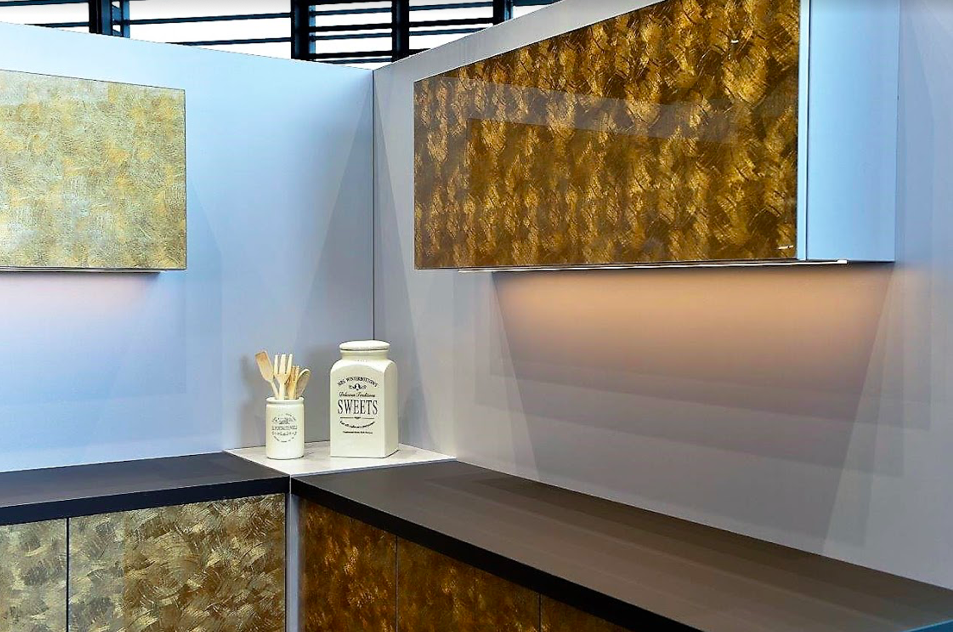
The magnetism of metallic finishes is irresistible. They look effortlessly sumptuous and lend an air of exclusivity to kitchen settings. The soft luster of metal finish laminates beautifully complements transitional schemes where you need a mix of old-school glamour and contemporary pizzazz. Our collection of Metal Laminates in Delhi are best suited for kitchen backsplashes, cabinets, shelves, and kitchen islands.
Like any of these ideas for your kitchen? We have more. Why not visit Ventura Architectural Experience Centre TODAY in 1/120, W.H.S, Kirti Nagar, New Delhi. You can also log on to our website venturaindia.com to view our wide-ranging assortment of surface decors. For personal assistance, you can reach us on 91-11-45546700 and 1-800-103-6756 (toll-free).
For labs that are dealing with multiple requirements, keeping both amber and clear desiccators on hand allows flexibility across workflows.
Maintenance and Care Tips for Vacuum Desiccators
To maintain performance and prolong lifespan, the following practices are recommended:
Inspect seals and flanges: You need to clean ground-glass surfaces regularly to make sure you get tight vacuum seals.
Lubricate stopcock spindles: Use only vacuum-compatible grease if required.
Avoid sudden pressure changes: Release the vacuum slowly to reduce the risk of implosion.
Regenerate desiccants: Heat silica gel or equivalent desiccants as per usage cycles to restore absorption capacity.
Use a rubber mat: Placing the desiccator on an anti-slip base reduces the risk of impact when you’re handling it.
Safety Precautions When Using Vacuum Desiccators
Working under a vacuum introduces risks. Proper operation and handling mitigate these effectively.
Avoid using damaged glassware: Even minor cracks compromise the structure under vacuum.
Apply vacuum gradually: Sudden drawdown can cause stress fractures.
Wear safety goggles and gloves: Particularly when opening under pressure or handling hazardous samples.
Avoid exposure to direct heat: Desiccators are not built for thermal applications unless specified.
Monitor vacuum level: Excessive vacuum can degrade seals or cause implosion during structural failure.
All Borosil Scientific desiccators are designed for standard laboratory vacuums (~670 mm Hg) when used as per recommended practice.
Manish Maheshwari
Position: Founder – Ventura International Pvt Ltd.
Manish Maheshwari, the visionary Co-founder of Ventura International. With a background in Engineering from IIT Roorkee and an MBA from IIM Lucknow, his expertise spans across Finance, Economics, and Strategy. At the helm of Ventura’s vision, Manish leads the charge in planning and executing strategies for growth and innovation. His unwavering passion ensures that Ventura sets the bar high, always striving for unparalleled excellence.
If you are someone whose heart belts out happy songs as you walk into a space awash in more of a 'behind-the-scenes-appeal' than the 'in-your-face-conventional-glamour', we'd say welcome to the
Hygge pronounced "hoo-gah" is a Danish lifestyle concept that encompasses all things warm, cozy, and nice. We instantly took to this concept as we are historically known for helping trade
Contemporary interiors turn convention on its heads—be it in terms of new finishes, accents, silhouettes or materials. Another defining characteristic of this aesthetic? It teaches us that there's no rule
Retro. Industrial. Contemporary. These three words best describe Homapal's 2019 Trend Collection that the brand just launched at the recently concluded World’s biggest furniture show- Interzum in May. Comprising a